
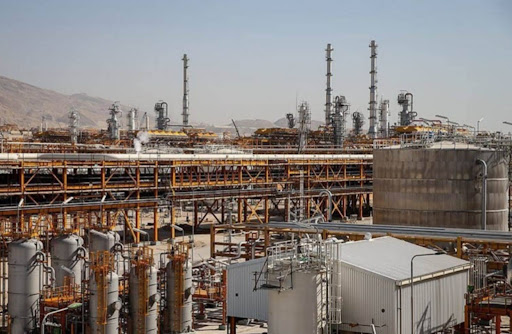
Iran’s Revolutionary Guards named energy targets across the Gulf region for retaliation on Wednesday after the South Pars gasfield — the world’s largest natural gas reserve — was struck by Israeli missiles. Facilities in Saudi Arabia, the UAE, and Qatar were identified by name, and workers were ordered to evacuate immediately. The escalation sent oil prices surging and placed the global energy system under unprecedented stress.
South Pars had been deliberately spared by Israel and the US throughout the conflict, as both understood that striking it could provoke a response with severe global economic consequences. That caution was abandoned Wednesday, when Israeli forces attacked the field with reported US authorization. The move signaled a fundamental shift in how the two allies perceived the risks and benefits of targeting Iranian energy infrastructure.
Iran’s state media listed the Samref refinery and Jubail complex in Saudi Arabia, al-Hosn gasfield in the UAE, and Mesaieed and Ras Laffan in Qatar as imminent targets. Evacuation orders were issued publicly and urgently. Governor Eskandar Pasalar of Asaluyeh said the attack had launched a “full-scale economic war” and described the US-Israeli decision as a catastrophic miscalculation.
The oil benchmark climbed nearly 5% to $108.60 a barrel. European gas prices surged more than 7.5%. Gulf oil exports had already fallen 60% from pre-war levels, crushed by infrastructure damage and Iran’s Strait of Hormuz blockade. Iran’s own crude had continued to flow through the strait while it blocked its neighbors’ shipments — an asymmetry that had given Tehran a powerful economic weapon throughout the conflict.
Qatar’s government spokesperson issued a formal warning against targeting energy infrastructure, calling such actions a threat to global energy security and regional welfare. The announcement reflected growing alarm across Gulf capitals and international energy markets. The world now faced the prospect of a conflict that was no longer merely military — but one that threatened to reshape global energy supply for years to come.