
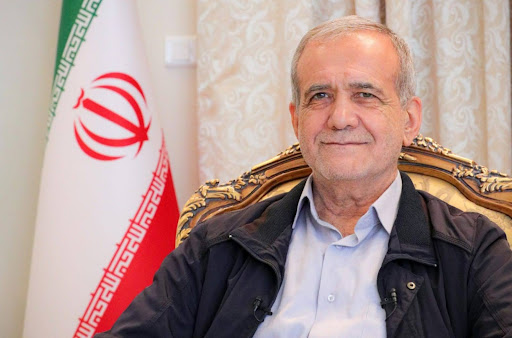
Iranian President Masoud Pezeshkian has pressed Gulf states to make a clear choice between pursuing peace and continuing to facilitate war against Iran. His message, delivered as the conflict between Iran and the United States entered its second month, frames the Gulf’s security dilemma in stark and simple terms. Tehran is using the war’s regional spillover as a diplomatic lever to force Gulf governments to reckon with the consequences of their choices.
The conflict has had a direct impact on Gulf nations including Saudi Arabia, the UAE, Kuwait, Qatar, and Oman, where US military operations against Iran have been launched and where Iranian retaliatory strikes have followed. These nations have absorbed significant damage as a result of a war originating beyond their own borders. The political pressure on Gulf governments to find a way out of the conflict is mounting.
Pezeshkian’s post on X reinforced Iran’s defensive military doctrine while making it clear that attacks on Iranian infrastructure or economic assets would be met with strong retaliation. He urged Gulf leaders to deny enemy forces the ability to use their territory for military purposes, arguing that this was the only real path to security and development. The statement was precise and politically calculated.
Pakistan’s diplomatic initiative has been one of the most active in the region, with Prime Minister Shehbaz Sharif engaging Iranian leadership and relaying Iran’s conditions for dialogue. Sharif’s meeting with Pezeshkian produced the clear finding that trust is Iran’s key precondition for any formal peace process. Pakistan’s involvement has been positively acknowledged by Tehran, reinforcing Islamabad’s role as a trusted neutral actor.
A multilateral diplomatic meeting in Pakistan is bringing together foreign ministers of Saudi Arabia, Egypt, and Turkey for intensive consultations on the war. Their discussions with Pakistani Foreign Minister Ishaq Dar and Prime Minister Sharif aim to produce a coordinated regional position on de-escalation. The talks are an important test of whether regional diplomacy can succeed where military deterrence has so far failed.